This Blog is Dedicated to our dear friend Karen.
When she left this life she left a hole in our hearts as well as several to be read books.
We, her friends, will read these books for her.
This blog will be a sort of book club for us to post our thoughts and feelings about the stories and feelings we have of Karen while we read.

Monday, November 23, 2015

#305 Kiss the Girls by James Patterson

13148

So... yeah...
Parts of this book were ok. It's a mystery, and the mystery part is pretty solid. Women are disappearing from the Raleigh/Durham/Chapel Hill area of North Carolina; Alex Cross's niece is one of them. Alex leaves Washington DC to investigate his niece's disappearance. He has absolutely no jurisdiction, but what the hey, the local cops end up inviting him in on their investigation. Because he's that guy that was on the tv, that caught that guy that kidnapped that girl. Also, that one FBI guy vouches for him.
Cross spends I don't know how long down in North Carolina, away from his job, because what the hey, there's probably nothing going on in Washington that requires his attention, right? ( After the case is resolved, the kidnapped girls are found, etc., he spends some more time away from his job, lounging oceanside with his maybe - girlfriend. Maybe I should be a police detective in DC, so I could take a bunch of time off whenever I want.
The main thing I need to say about this book: parts of it are very graphic. The kidnapper is a serial rapist (and murderer, although the murdering is kind of an afterthought); there's a pretty graphic description of him raping one of his victims, and another scene that involves milk, a snake, and a woman's anus. The point Patterson is making, I think, is that this guy feels society's rules and norms don't apply to him. Which could probably have been established without the (sometimes literally) gory details.
Overall, the book was a decent read, an improvement over the first one. Patterson still stumbles when writing from the point of view of a black man, but he does better than previously. I still can't understand how there can be a fully functional piano on the front porch of a house in Washington in the middle of winter, but whatever.


~Kris

Tuesday, November 10, 2015

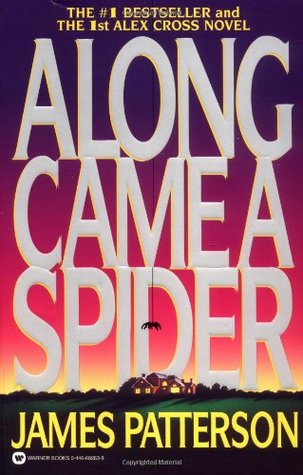
#306 Along Came a Spider by James Patterson

13145

James Patterson has written, or co-written, nearly 150 books, some of them really good examples of the mystery/suspense genre. This is not one of them.

The plot of this book centers around the high-profile kidnapping of two children - the son of the US Secretary of the Treasury, and the daughter of a famous actress - by the math teacher at their posh private school. Only it turns out that their math teacher is actually a sociopath and serial killer. Due to his previous training as a psychologist and FBI agent, Washington DC detective Alex Cross (and his character, Sampson) are called on to work with the FBI and the Secret Service on the case. (I mention Sampson in parentheses, because Patterson seems to forget him sometimes, putting Cross into investigative situations where his partner would should be with him.)


One of the main issues I have with this book is in Patterson's method of jumping from one point of view to another, and from one story thread to another. He has done this well in other books; it's something he's known for doing. Here, though, he doesn't do a good job of making clear to the reader that, ok, now we've moved from Alex Cross's p.o.v. to that of the killer, and now we're moving to Jezzie (really? Jezzie?) Flanagan's p.o.v. The transitions from one part of the story to another are confusing at times.


Another area of contention is in Patterson's writing of characters who aren't white men. I've mentioned this before regarding his writing of Lindsay Boxer in the Women's Murder Club books, as a weak-willed woman controlled by her woman-parts. At the beginning of Along Came a Spider especially, and (to a lesser extent) throughout the book, Patterson's portrayal of African American characters is pretty stereotypical. This is especially in evidence when he's writing dialog for Cross, a trained psychologist and highly educated man, who speaks at the beginning of the book exactly like the hoodlums and drug dealers in his neighborhood, peppering his dialog (and his asides to the reader) with "brotha" and "nigga" and other fun words. This "street talk" gradually diminishes by the end of the book, but it's insulting to consider that Patterson thinks all African Americans talk this way.


Aside from these issues, and a few smaller issues (Cross has a piano on his front porch. In Washington D.C. In the middle of winter.) the actual mystery is pretty interesting. There's (of course) a major plot twist (somebody kidnaps the little girl from the kidnapper!), and in the end the villain gets his comeuppance (sort of).

One other quirky note: in my library copy, someone has taken it upon themselves (bless their heart) to scribble out every instance of the word "fuck" and all of its various forms. The quirkiness comes in the fact that they did not deem it necessary to scribble out any other curse words. Or any of the somewhat graphic sex scenes between Cross and one of the other characters.
  

~Kris

Wednesday, November 4, 2015

#254 The Mechanical Cat by Torey Hayden

1159742

I really don't even know where to begin with this one. I guess I could start with a general observation about the author: Hayden is an American (grew up in Montana), writing about events taking place in the United States, but moved to Wales in 1980 and (I believe) still lives there. Although her fictional characters and the real people she writes about are all from the United States, she still peppers her books with British words. I'm not just talking about spelling color "colour", or saying "socialising" instead of "socializing", although she does do that; I'm talking about having American children refer to their "Mum" or using "boot" instead of "trunk", etc. This Anglicizing begins to feel like an affectation, and it can be a bit jarring to the reader. An American author writing about American characters for an American audience, I feel, should be using American English; otherwise she comes off as a bit pretentious. A small quibble, true; but if it's scattered throughout the book, and I cringe a little bit each time I see it, it slows the reading down.
Update: I just read that Overheard in a Dream is actually the English title of the book; the American title is The Mechanical Cat. So apparently, I've read the English edition of the book, and that would explain why this particular book is filled with "English-isms". But Hayden has done this in most of the other books I've read as well.

To be honest, I've gotten a bit burned out on Hayden. Not because she's a bad writer; while she comes across as a bit naive, she does an excellent job of describing the harrowing conditions her clients have gone through. And really, that's what has me burned out - the rough, incredibly violent and emotionally exhausting situations these children have been through. I tried to break things up a bit by reading some lighter fare (James Patterson) in between Hayden's books, but when I would return to her work, I was faced by yet another example of adults destroying children's lives. I need to take a break, so I'll be holding off on reading and reviewing any more of Hayden's work for a while.

I started reading the book quite a while ago (October 12); I don't know if it's the book itself, or being burned out on Hayden, or the fact that this is fiction, while most of her other books I've read are not, but I just could not get motivated to continue reading. I thought of putting it to the side and coming back to it later, but knew I wouldn't return to it if I left it. So I soldiered on, and things started to get better.

This book is about four intertwining stories. The narrator, James, is a child psychologist who has recently divorced his wife and moved from Manhattan to the Badlands of South Dakota. His interactions with his ex-wife, his children, and his co-workers are one of the stories (and really, probably the least necessary to the main plot). Conor, one of James' clients, is a young boy who has been (possibly incorrectly) diagnosed with autism; James' sessions with Conor and Conor's treatment are a second part of the plot. As part of his methodology, James requires the parents and siblings of his patients to participate in counseling as well; these sessions are a third part of the story, especially Conor's mother, Laura's recounting of her childhood and early adulthood. In counseling, Laura confides to James that she can see into a different world, that of a woman called Torgon; Laura's stories of Torgon's life are the fourth and final part of the story. Hayden switches back and forth among these four story lines, and in fact, there is a point where she spends so much time with Laura's and Torgon's stories, that I thought she had forgotten about what was supposed to be the central issue in the book - Conor's treatment. But by the end of the book, I realized (or realised) that the stories of Torgon and Laura actually explain the defining moments that caused Conor's withdrawal and autistic-like behavior.

I enjoyed reading James' interactions with clients like Conor and other children; it was interesting to compare that to how he spoke with and treated his own children. Hayden also did a good job of giving Conor his own, different way of speaking - referring to himself in the third person, making statements or requests via his stuffed cat, and his way of making observational statements: "Here is a window.", etc.

So, really, I did enjoy parts of this book. And the book, as a whole, wasn't bad; Hayden's writing style is smooth and (usually) easy to follow, and she doesn't bury the reader under a lot of technical lingo. The characters were, for the most part, interesting, but I didn't care about them as much as I had those in her nonfiction. And maybe, at the end of it all, that's why I didn't like this book as much as I did her nonfiction - I didn't have that emotional investment in the characters.
 

~Kris

Saturday, October 31, 2015

#229 The Five People You Meet in Heaven


Why haven't I read this before? I remember everyone talking about it, saying it was great! I agree!!!
after the last book I read I needed a quick feel good book. Mandy suggested this one and it delivered!! I read this book in two days! I could have done it faster than that but I do have other responsibilities- darn it!!! 
This book really made me think if this is the process of getting to heaven really like, then who would I meet, what lessons would they teach me? I also find myself pondering who I would wait for to teach them. 
It makes me aware of everyone I come in contact with, how am I contributing to their life? So many thoughts this book provided for me. 

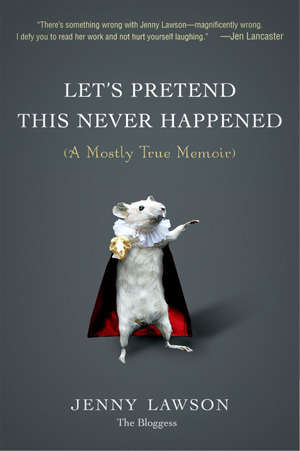
#34 Let's Pretend This Never Happened

Oh Gosh!!! Seriously the title says it ALL!!!! I have put off writing this review because I try to be a positive person and I have struggled with what I wold say about this book. Honestly I wish I could pretend I never read this book. I HATED it!!!! I took me 3 months to read. Every time I picked this book up to read I'd get grumpy, therefore I stalled in finishing it. I almost quit, but I committed to read this for Karen so I finished it. 
With that being said I think Karen would have enjoyed this book, I think she would have got the humor that was intended. The writer, is witty, has a great personality, and deals with a lot in her life. 
I will say the book did get better near the end. But just not enough for me!
That is all I've got to say. 

Thursday, October 29, 2015

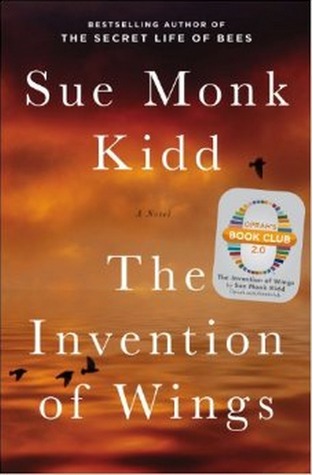
#25 The Invention of Wings by Sue Monk Kidd

The Invention of Wings

I really enjoyed this story.  I had no idea going into this book that it was based on the true story of the Grimke sisters.  The Grimke sisters were feminist and abolitionist way before it was popular or common. Their history has been pretty much erased as so few have heard of them and the work they pioneered in freeing slaves and women's rights. 

This is southern literature about a wealthy family, the Grimke's, that run an urban household of slaves and a large family.  Two of the daughters go against their families belief and embarrasses them and shames them when they start fighting for the equal rights of slaves. 

We also learn to love Handful and her family, slaves of the Grimke's. 

Monday, October 12, 2015

#257 The Tiger's Child by Torey L. Hayden

106026

There's a point in this book where the author returns from vacation to find a letter from Sheila, the subject of this book; Sheila writes that she's planning to commit suicide. The letter had been sent at about the same time as Hayden had left for vacation. She tries to figure out how she can find out whether Sheila was still alive, but can't think how she would phrase the question to the staff of Sheila's group home; in the end, she does nothing and gets caught up in her other clients and activities. Reading this, I thought, "Call the group home, tell them Sheila had written to you, and ask if she can have visitors. Even if they don't tell you whether Sheila committed suicide, they'll at least tell you whether she's there."

I've realized that's the thing that bugs me about Hayden - she has all this formal training, but so much of the time she doesn't know how to react to a situation. A student breaks down? She sits and watches instead of reacting. A child disappears? She and a coworker stand and argue for 15 minutes about whose fault it is before looking for him. So much of the success Hayden has with clients in these books seems to be made up of lucky breaks and stumbling onto a method that works. In fact, she admits as much in several of the books.


That being said, I enjoyed reading this book. Hayden originally had Sheila as a student at the age of 6 (a story written about in her book "One Child"); "The Tiger's Child" retells that story, then picks up when Hayden reunites with Sheila eight years later. In the interim, Sheila has had a pretty rough life; her addict father basically pimps her out to support his habit, she moves from one foster home to another, etc. Hayden is operating a summer program for some of her child clients and offers Sheila the chance to work as an aide in the program. Sheila's interactions with the children and with Hayden, and her coming to terms with all the things that have happened to her, make up the rest of the book.
Reading Hayden's books, and her accounts of the horrible things that have happened to these children, is emotionally exhausting. The fact that people, often the children's parents themselves, could do such terrible things, makes me incredibly sad. I'm thankful that there are people like the author who are driven by a need to help these children work through the severe emotional trauma they've been subjected to.


~Kris